Currency Cables is a leading wire and cable manufacturer in Eastern India, trusted since 1993 for quality and safety.

AAC Conductors (All Aluminium Conductor)

AAC Conductors (All Aluminium Conductor) for Industrial and Domestic Use

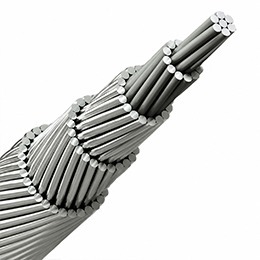
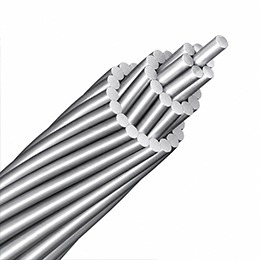
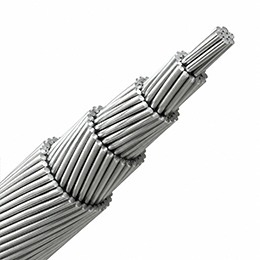
Currency Cables AAC Conductors (All Aluminium Conductor) are bare overhead transmission lines manufactured exclusively with high-purity, hard-drawn electrolytic EC-grade aluminium wires stranded in concentric helical layers. Engineered in strict compliance with IS 398 (Part 1), BS 215 (Part 1), and IEC 61089, these conductors provide high electrical conductivity, low weight, and natural corrosion resistance. Because AAC contains no internal steel core, it eliminates bimetallic galvanic corrosion, making it suitable for low-to-medium voltage urban distribution grids, coastal power corridors, and high-density industrial zones where pole spans are short and atmospheric salt or chemical moisture is high.

Features & Key Benefits

High Electrical Conductivity: Composed of minimum 99.5% pure EC-grade aluminium, maximizing current throughput and minimizing ohmic power losses ($I^2R$).Superior Coastal Corrosion Resistance: Eliminates internal steel core components to prevent galvanic corrosion in maritime, saline, and humid industrial atmospheres.Lightweight Profile: Lower weight per kilometer minimizes mechanical load on distribution poles, cross-arms, and line insulators in dense urban settings.Cost-Efficient Installation: 100% aluminium composition provides higher current capacity per rupee compared to copper or steel-reinforced conductors on short-span layouts.Easy Handling & Splicing: High flexibility and single-metal structure allow fast field termination, crimping, and line maintenance without specialized steel-cutting tools.

Technical Specifications Overview

Specification parameter Standard Rating value
Applicable Standards IS 398 (Part 1):1996 / IEC 61089 / BS 215 (Part 1) / ASTM B231
Material Construction Hard-drawn Electrical Conductor (EC) Grade Aluminium (min 99.5% purity)
Standard Industry Codenames Rose, Iris, Pansy, Poppy, Aster, Phlox, Daisy, Peony (and custom strand configurations)
Stranding Configurations 7 Wire (1+6), 19 Wire (1+6+12), 37 Wire (1+6+12+18), 61 Wire
Operating Temperature Continuous: Up to 75°C – 80°C

Common Applications & Uses

  • Low-tension (LT) and medium-voltage (MV) urban overhead electrical distribution systems.
  • Coastal, maritime, and island distribution grids exposed to high airborne salt and humidity.
  • Chemical plants, fertilizer units, and industrial estates with aggressive atmospheric pollutants.
  • Primary electrical busbar connections, switchyard equipment jumpers, and substation drop leads.
  • Railway electrification yards and short-span secondary utility distribution networks.
Why Choose Currency Cables

Manufactured from 99.5%+ pure EC-grade aluminium with precision-calibrated concentric stranding, Currency AAC Conductors deliver maximum current carrying efficiency, zero galvanic corrosion, and reliable field life backed by over 30 years of manufacturing excellence.

Frequently Asked Questions

AAC (All Aluminium Conductor) is constructed entirely of hard-drawn EC-grade aluminium strands, offering high conductivity, lower weight, and resistance to corrosion, but lower tensile strength. ACSR (Aluminium Conductor Steel Reinforced) incorporates a high-tensile galvanized steel core surrounded by aluminium strands, giving it significantly higher mechanical strength for long spans across towers, though it is heavier and subject to galvanic risk in salty environments.

In ACSR conductors, salt and moisture can penetrate between the aluminium strands and the galvanized steel core, causing galvanic (bimetallic) corrosion over time. Because AAC consists entirely of uniform EC-grade aluminium, it naturally forms a protective aluminium oxide barrier with no dissimilar metal junction, making it durable against maritime salt air and chemical emissions.

AAC conductors are designated by flower codenames denoting cross-sectional areas and stranding structures: Rose (25 mm²): 7 / 2.11 mm (Urban secondary distribution) Gnat / Iris (50 mm²): 7 / 3.00 mm (Municipal medium-voltage feeders) Pansy (65 mm²): 7 / 3.45 mm (Distribution lines and substation leads) Poppy (100 mm²): 7 / 4.27 mm (Heavy urban distribution busbars) Aster / Phlox (150 mm² – 200 mm²): 19 / 3.25 mm to 3.78 mm (Substation interconnects and urban feeders) Daisy / Peony (250 mm² – 400 mm²): 37-strand constructions for major substation bus arrangements.

No. Because AAC lacks a high-tensile steel core, it has lower mechanical breaking strength and will sag excessively if strung across long tower spans. It is recommended for short-to-medium spans (typically up to 50–80 meters) between distribution poles, urban road lines, and rigid substation bus structures. For long spans, ACSR or AAAC (All Aluminium Alloy Conductors) should be selected.

Each production drum is tested at our internal testing facilities in Kolkata/Howrah. Checks include: Wire Surface & Diameter Checks: Laser micrometer verification of strand uniformity with zero burs or kinks. Tensile Strength & Elongation Tests: Verifying breaking load per individual wire in accordance with IS 398 (Part 1). Wrapping & Ductility Tests: Ensuring the wire can be wrapped around its own diameter without cracking. DC Resistance Test: Measuring exact electrical resistance at 20°C using precision Kelvin double bridges to confirm high conductivity.

Related Products

AAAC Conductors (All Aluminium Alloy Conductor)

Currency Cables AAAC Conductors (All Aluminium Alloy Conductor) are hi...
ACSR Conductors (Aluminium Conductor Steel Reinforced)

Currency Cables ACSR Conductors (Aluminium Conductor Steel Reinforced)...

Product Enquiry

Request pricing details, bulk discount offers or a callback from our technical team.